Monday, 24 September 2018

Africa's biggest city, Largos

Africa’s biggest city, Lagos

Image result for lagos
pmnewsnigeria.com
Lagos is the seventh fastest growing city in the word, found in Nigeria, Africa, its home to more than twenty-one million people. Africa is the second largest continent just after Asia, its four times bigger than north America, south Africa which is one of Africa’s fifty-four countries, is five times bigger than the United Kingdom. Africa covers 20% of Earths land area and has a total population of 1.2 billion people as of 2016, it also accounts for about 16% of the world's human population(1).

Nigeria is a country situated in west Africa unlike many countries in Africa part of the country boarders the ocean (Gulf of Guinea) its total population is 186 million in 2016 which is the largest out of any African countries. Nigeria is just over twice the size of California(2).
Largos Is a megacity which means to have a population greater than ten million people, largos actually has a population of 21 million. Largos generates forty % of Nigeria’s Internally generated revenue, if largos was a country in Africa it would be the seventh largest economy with a gross domestic economy of ninety billion dollars (3).
Image result for lagos economy
CNN.com

So Largos is obviously one of the upcoming cities in Africa and the world so how is Largos doing so well when its in one of the most deprived and corrupt continents in the world? One reason that Lagos has developed so well is because of its geographic location. The port of Lagos has allowed Nigeria’s huge oil resources to be transported worldwide bringing further investment into the city, starting in 1999 with the election of Bola Tinubu who was previously an oil company executive and pushed for three administrations which allowed the private sector to turn Lagos into the city it is today creating a state output of one hundred and thirty six billion dollars which is more than a third of Nigeria’s GDP(4).
Lagos had one million and four hundred thousand people in 1970, by two thousand and eight this was eleven million, now twenty-one million, thousands of people arrive in Lagos every day to search for a better standard of living. It’s this urban pull factors such as better wages and more opportunities which have significantly contributed to Lagos huge population growth. In two thousand and ten, sixty-nine % of the eighty million rural people were living below the poverty line in Nigeria. In urban areas only forty-two % of people have access to clean water and only twenty-eight % have access to proper sanitation facilities along with the fact that only forty % have access to electricity meaning that they are limited to subsistent farming or cash crop lifestyle which earns them a fraction of the money they could earn in Lagos. So it’s very easy to see why people would want to move to Largos(5).

Lagos although thriving in a sense is experiencing huge issues such as overpopulation, pollution, traffic and unemployment leading to crime. Many developing world megacities come across these issues they have not got the proper infrastructure to support the huge population it has which in turn leads to informal settlements whose underground economy can often undermine that of the cities.  The government is very aware of these issues, to combat the overpopulation huge tower blocks are being built to accommodate people(6). In my opinion one of the most important things to establish is transport infrastructure, this is because people generally cant afford to live in cities so choose to live in suburban areas. Apparently up to twelve million people use public transport however Lagos has still one of the worse traffic issues in the world and people can often be stuck in traffic for 6 hours a day this reduces the productivity in cities and means that people are forced to live in squalid inner city houses(7).


Rferences


1-      http://www.worldometers.info/world-population/africa-population/. Population of Africa (2018) - Worldometers [Accessed 18/09/2018]
2-      https://www.cia.gov/library/publications/the-world-factbook/geos/ni.html. The World Factbook — Central Intelligence Agency [Accessed 18/09/2018]
3-      https://qz.com/africa/676819/lagos-is-africas-7th-largest-economy-and-is-about-to-get-bigger-with-its-first-oil-finds/. Nigeria's Lagos is Africa's 7th largest economy and is about to get bigger with its first oil discovery — Quartz Africa [Accessed 18/09/2018]
4-      https://www.ft.com/content/ff0595e4-26de-11e8-b27e-cc62a39d57a0. Nigerian economy: Why Lagos works | Financial Times [Accessed 18/09/2018]
5-      https://tradingeconomics.com/nigeria/rural-population-percent-of-total-population-wb-data.html. Rural population (% of total population) in Nigeria [Accessed 18/09/2018]
6-      https://www.cfr.org/blog/nigeria-faces-crippling-population-boom. Nigeria Faces a Crippling Population Boom [Accessed 18/09/2018]

7-      https://www.dailytrust.com.ng/12m-lagos-residents-use-public-transport-daily-ambode.html. 12m Lagos residents use public transport daily – Ambode – Daily Trust [Accessed 18/09/2018]








Friday, 10 March 2017

Economic Sustainability Versus Environmental Sustainability


Sustainability means to meet the needs of today populations without compromising the needs for the future generations, in this article we are looking at examples of economic and environmental sustainability.

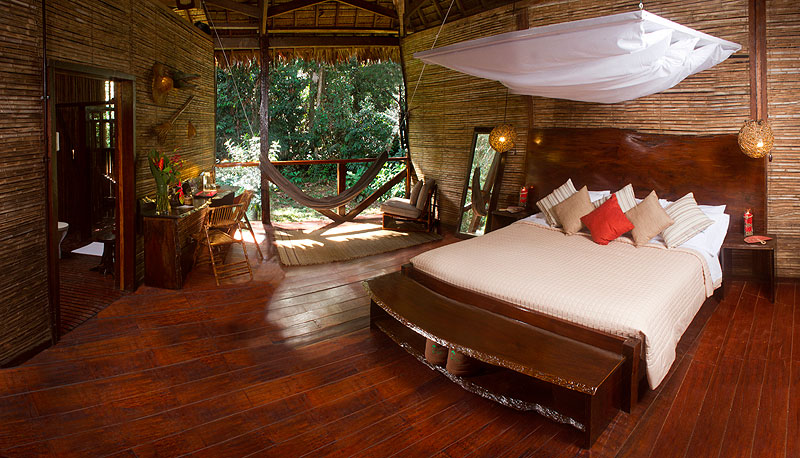
An example of environmental sustainability is the PPosada Amazonoas eco-lodge in the Amazon rainforest Peru, environmental sustainability has been achieved here by maintaining a low level of development, only small numbers of people are allowed here at once here in the groups of 40-50, instead of cutting down the rainforest is used for adventure and education, the lodge its self-has been created using local resources that are biodegradable.


However even though environmental sustainability has been achieved is has come at a cost, the level of development here is is very low and people still rely on subsistent farming to survive, to develop further economic development may have to be improved which may have hindered its environmental sustainability in order to see an increase in things such as GDP per capita and a general improvement to standard of living.
Image result for Posada Amazonas eco lodge
https://media-cdn.tripadvisor.com/media/photo-s/09/f8/f3/c0/refugio-amazonas-main.jpg
Image result for Posada Amazonas eco lodge
http://www.viaja-peru.com/images/photos/refugio_amazonico.jpg


Video on the Lodge 
https://www.youtube.com/watch?v=9BD-uwrvCbs


China is an example of economic sustainability, in the last 50 years china has gone from a poor communist country to the seconds largest economy behind the USA however i will soon overtake the Unites states to become the world leading super power some say that by 2018 it will overtake USA china's economy has grown at a staggering 8 to 10% each year compared to the USA which in 2012 grew by 2.2%, it has undergone rapid urbanisation and around 140 million Chinese people have moved from rural to urban areas in hope of a better life with higher wages.


Image result for china gdp 1980
https://nexvucapital.files.wordpress.com/2012/12/china-gdp-1980-to-2012.jpg

China has become economical sustainable with only 12% of its population living in poverty compared to in the 1980s where this number was at 88% also between 1981 and 2008, the proportion of China's population living on less than $1.25/day is estimated to have fallen from 85% to 13.1% its per capita income in increased fivefold between 1990 and 2000, from $200 to $1,000. Between 2000 and 2010, per capita income also rose by the same rate, from $1,000 to $5,000, moving China into the ranks of middle-income countries, these numbers are evidence that China has allowed its people to have a better standard of living.

HOWEVER china hass developed and created economic sustainability at a cost, the cost is its environment, therefore, china is not environmentally sustainable, 7 of the 10 worst polluted cities are found in china cities such as chongqing  which is the world fastest growing city, 70% of chinas rivers and lakes are polluted and 30% of china is effected by acid rain caused by coal burning power stations realising sulphur into the atmosphere, this lack of environmental sustainability will later hider its ability to develop further as its finds it hard to find the resources in order for it to move on. 
https://en.wikipedia.org/wiki/List_of_countries_by_carbon_dioxide_emissions

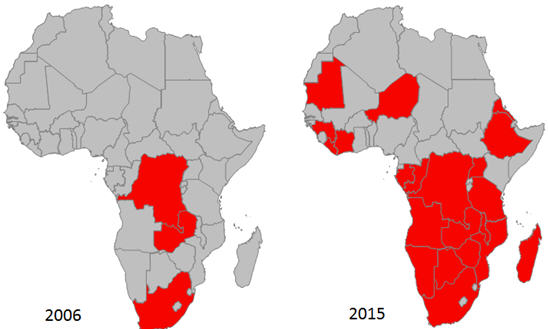
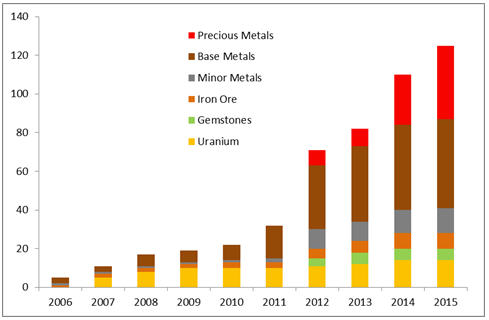
China is so low on resources that it is beginning to by up land in other countries and source its resources there, places such as Australia have banned China from purchasing land in its country however in the developing world and LICs countries such as south Africa but these countries welcome the income even though it is damaging it in the long run.


China is charging Africa's mining landscape - 2006 - 2015 maps
Countries in Africa where mining interest of China-based companies exists, the evolution from 2006 to 2015. 
China is charging Africa's mining landscape - graph2
Evolution of major mining/mineral processing assets in Africa with China-based companies’ interest, cumulative numbers. Source


To conclude whereas the pasta amazonian eco-lodge has managed to become environmentally sustainable it has done this at the cost of development to the local people, they could easily chop don the rainforest in there land and make a much larger income, unlike China which has increased its countries livelihood but in the process destroyed much of its beautiful environment which will later take its toll as it wants to develop further.

By Ben Garrett  

Cool fact the 3 gorges dam in China stores so much water behind it (39 trillion kilograms of water) that it slows the rotation of the earth and increase the length of day by 0.06 microseconds making the Earth only very slightly more round in the middle and flat on the top. It would shift the pole position by about two centimeters (0.8 inches). This effect would extremely small.


reference 

https://www.forbes.com/sites/mikepatton/2016/04/29/global-economic-news-china-will-surpass-the-u-s-in-2018/#747cccff224a

http://www.tradingeconomics.com/united-states/gdp-growth

https://www.foreignaffairs.com/articles/united-states/2016-04-13/once-and-future-superpower


https://en.wikipedia.org/wiki/Poverty_in_China

https://en.wikipedia.org/wiki/List_of_countries_by_carbon_dioxide_emissions

Wednesday, 25 January 2017

The benefits, costs and success of the regeneration for the 2012 London Olympic games.


The benefits, costs and success of the regeneration for the 2012 London Olympic games.


Image result for london olympics


In 2005 London won the bid to host the 2012 Paralympic and Olympic games with the idea that east London would be regenerated through sports led regeneration, now in 2017 what was the success in of the Olympic games?

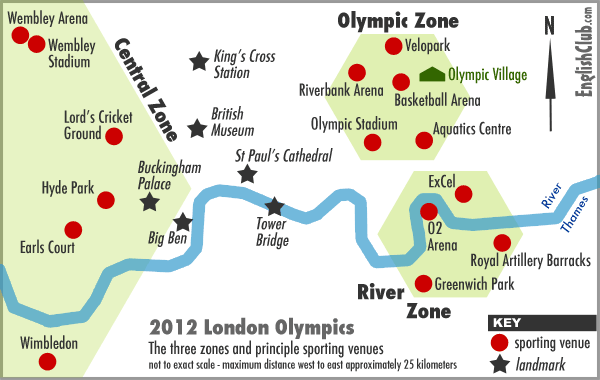
The budget for the Olympic games was set to 10 billion pounds which were the highest on record so far, some of the things that have to be built for the 2012 games were: an Olympic village, Basketball arena and an Olympic stadium. The location of the stadium is Stratford which in the 1970s and 80s was hit with widespread unemployment and decline in industry, areas such as the river lea which runs straight through the Olympic park which had high levels of toxic waste, the regeneration of the land involved moving 11,000 people and 380 companies needed repositioning and paying compensation.


Image result for olympic park map 2012 london location
A simplistic view of the Olympic park
https://www.englishclub.com/images/vocabulary/Olympics/2012-london-olympics-zones-map.png

Before the Olympic games had even begun in 2010 Google and Facebook had already signed a deal to create a new media center providing 3000 new high tech jobs giving a good incite to the possibilities that the park could become after the games. Another even bigger resource will be the affordable houses created from the construction of the Olympic village, the average house price in Newham is £369,000 and its GDP per capita is only £36,000, therefore, there is a big demand for cheap affordable housing especial because places like  canning town are close by with wages 25% below UK average. There will be nearly 3000 houses built with 35% of them being affordable housing however the amount was meant to be 75%.

(taken from www.bestplaces.net/economy/city/connecticut/stratford )

Land prices around the Olympic village have risen and now places such as Clays lane which was once a rundown area of London is now the desired spot to live in the increase in land price will help bring down the £10 billion price tag for the cost of the games, other things that help with the cost of the games are: the sale of 9 million tickets, transport for the millions of people who come to watch the games and £1.5bn high value overseas contracts such as helping to design venues in other host-nations like the winter Olympic games in Russia.

( http://www.bbc.co.uk/news/uk-23370270)


Wednesday, 14 December 2016

The growth distribution and development of a transnational corporation (Shell)


The growth, distribution and development of Royal Dutch Shell


Shells started off as a transport company based in London, it later merged with a Duch company called The Royal Dutch and became the royal dutch shell company in 1907.

Shell is a transnational corporation (TNC) this means that the company operates in at least 2 countries. The HQ is generally located in the country that the corporation was founded in while remaining assets, mainly the manufacturing plants, are located in LEDCs where labour is cheap and readily available.


This picture shows where shell operates around the world in 2013, today shell is the 5th largest company in the world and revenues a total of $451.2 billion
and gains a profit of $16.5 billion and employing around 100,000 people.


During the First World War, Shell was the main supplier of fuel to the British Expeditionary Force. It was also the sole supplier of aviation fuel and supplied 80 percent of the British Army's TNT this allowed it to sell large quality's of oil to the British and generate a good profit margins, when 17% of the world's oil supply was seized when Germany attacked Poland shell had even less competition and continued to grow and thrive.


One of the ways that has allowed shell to grow in to such a competitive business is that they have heavily invested into other areas of oil such as exploration, shipping and refinery, owning there own drilling rigs made them huge amount of money and really gave them a position in being one of the biggest company in the world because it can refine and mine its produce allowing it to sell it at low rates.

Shell first started to sell and produce oil in the USA, by 1929 Shell gasoline was being sold throughout the United States it had purchased everything that is required to allow it to expand and grow, by the late 1920s the company was actively laying pipeline across the USA to transport oil from Texas to Roxana, Illinois in its Wood River refinery.

In the 1930s as shell invested more into research, it became the leading company is aviation fuel and also helped in the rubber shortage as it was able to produce epoxy resins, ethylene, synthetic rubber which were at a shortage in the war.

One of its biggest successes was the 1983 strike at the Bullwinkle prospect in the Gulf of Mexico. This recovery operation was expected to produce 100 million barrels of oil, now Shell has 9 subsidiary businesses scattered around the world from Hong Kong to Nigeria.


Shell has had huge natural disasters and environmental issues over the past decade however it has done a good job in addressing these issues and doing there best in cleaning up its mess, in may 2016 88,200 gallons of oil was spilled into the Gulf of Mexico causing an oil sheen that was 2 mile by 13 miles long and was visible in the sea about 97 miles off the Louisiana coast.


Monday, 31 October 2016

Economic modernisation and Globalisation


Economic modernisation

In 1950 to prevent communism from spreading western countries invested in places such as India and South Korea. A man named WW Rostow produced a model that helped promote economic development and also reduced poverty.

Economic development is where HICs such as America invest money into LICs, this investment can include aid such as vaccinations to help reduce infant mortality rate. HICs also provided loans to allow countries to develop at a quicker rate, the economic development model that WW Rostow produced shows that LICs countries invest a large amount of their GDP back into industry allowing them to rapidly develop through the secondary sector and into tertiary and eventually into the Quaternary sectors.


Population modernisation  

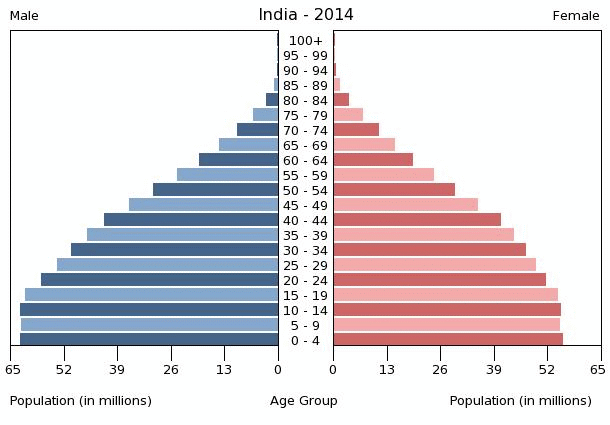
As aid came in from HICs the death rate began to decrease and the average life expectancy began to rise this created a large youthful population such as India's population where 40% of people are under the age of 20, a direct result of such as big proportion of people being so young within a country is that there are huge amount of child labor “global number of children in child labour has declined by one third since 2000, from 246 million to 168 million children. More than half of them, 85 million, are in hazardous work (down from 171 million in 2000).”

Image result for india population pyramid
India Population pyramid 2014


The transfer of western technology around the 1960s helped countries develop, the aid was focused in two main sectors : death control these reduced infant mortality and increased life expectancy the other main type of aid was called the green revolution and allowed mechanisation and high yielding seeds to take effect, without this it was possible that the rapidly developing countries would not have enough food to supply the growing population.

Because of the large amount of money that flooded into these south Asian countries which were primarily to stop the spread of communism these countries rapidly developed and became NICs and were known as the Asian tigers. there are now two separate groups of the Asian tigers and old and a new group, the old Asian tigers or original Asian tigers are Taiwan, South Korea, honk kong and Singapore

Globalisation

Globalisation focus on trade between countries and focuses on HICs investing and benefiting off low wages and cheap mass production of LICs such as China, where economic development differs from globalisation is that countries that undergo globalisation often get their resources striped and are then are neglected as NGOs move onto the next cheap developing country whereas countries such as South Korea which was given loans and aid rapidly develop through these stages and specialists in areas such as electronic equipment.

This site shows South Korea's top exports and gives a great insight into the total wealth and power this small county has

The way that globalisation trade works are that HICs purchase low end cheap goods and the LICs then purchase high end expensive equipment from HICs this then allows them to develop slowly, if the LICs were to process these low end goods and then manufacture goods making them worth more they would drastically increase their GDP.


HIC- high income country LIC- low income country NGO- non government organisation GDP- gross domestic product NIC- newly industrialised country


Friday, 30 September 2016

Mount saint helens eruption 1980 may 18th


Mount St. Helens or Louwala-Clough is an active stratovolcano(which means its formed by layers of ash and lava) located in Skamania County, Washington, in the Pacific Northwest region of the United States, mount saint Helens is still active and its last eruption was in 2008.


Image result for stratovolcano layer
This shows how a stratovolcano is formed

On March 16, 1980, the first sign of activity at Mount St. Helens occurred as a series of small earthquakes occurred, on March 27, after additional earthquakes, the volcano produced its first eruption in over 100 years, huge amount of ask was funneled into the sky, however this initial eruption gave no evidence that a later eruption would occur. 


Image result for mount saint helens map usa
www.thinglink.com

The initial earthquake that was created by the pressure of magma building up underneath mount saint Helens was a 4.2 in the rictor scale, the earthquake was caused by the subductive plate boundary Juan de Fuca plate subducting beneath the North American plate , this caused a benniof zone that would create the magma that was storing under the mountain.

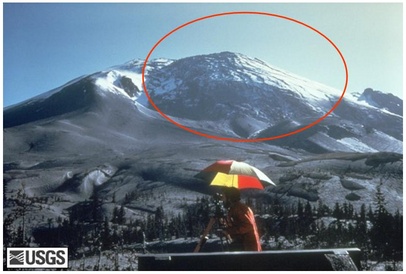
Fore weeks after the initial earthquake and eruption a bulge in the mountain occurred this bulge grew with time and towards the last few days before the eruption and landslide the bulge seemed to breathe, the bulge is magma exploiting a weak spot as it cant find a blowhole.


Image result for mount saint helens bulge
Suddenly at 8:32 a.m a magnitude 5.1 earthquake directly below the north slope triggered that part of the volcano to slide approximately 10 seconds after the shock The landslide, the largest in recorded history, traveled at 110 to 155 miles per hour, the total amount of rock moved was 1.5 billion tonnes, the surrounding 230 square miles were destroyed and a 17 mile blast zone was produced. 


Image result for mount saint helens before and after
The blast released energy equal to 24 Megatons of TNT, one megaton is 1,000,000 tons of chemical explosives the fat boy bomb was 20,000 tons compared to 24,000,000


Thursday, 15 September 2016

Istanbul an inevitable earthquake disaster waiting to happen


The Little Apocalypse was the last earthquake to hit Istanbul in 1509, 503 years ago.
For a few years now seismologist have predicted that an earthquake could flatten Istanbul the capital city of turkey with a total population of around 14,000,000 (18% of turkeys total population) the fault that Istanbul is located near is the North Anatolian fault, in the past decade earthquakes have moved there way along the fault like unzipping a coat and its next predicted place to strike will most likely effect Istanbul.


Image result
photo credit to www.earthmagazine.org
Seismologist have predicted that the earthquake will be very large they also say that there is a 65% probability that Istanbul will be hit by a 7.6 earthquake by 2030 however this has to be taken with a pinch of salt as there have been countless times when scientist have been wrong about earthquakes and there is really no way they can predict what the fault will do.

The impacts an earthquake will have on Istanbul?

Istanbul is not geographically in a worse place than LA or Tokyo, however, its the rate the city is expanding and the style of houses and rack of regulation thats scary about 65% of buildings in Istanbul don't meet the rules and the city is growing too fast for anyone to be able to keep up this will lead to buildings being faltered by something called the pancake effect a good example of this is in my last blog the 2010 haiti earthquake, however, Port-au-Prince has a total population of around 704,776  compared to Istanbul's 14 million and growing at a rate or 400,000 a year which is 3.45%, this is the fastest growing metropolitan population in the world.

So what has Istanbul done to prepare for the next earthquake?

The city authorities have tightened building regulations so that they are more earthquake ready and there are calls to demolish tens of thousands of buildings to prevent them falling down and causing a risk to life , however will this all be done in time ?

One of the main problems is that people cant afford to move house to a more earthquake stable place or the cant afford to build earthquake resistant houses in the first place in the west on the city in the district of Avcilar on the European side of city there are hundreds of abandoned flats as people with money have moved out knowing that if an earthquake strikes the flats will most likely fall. 
Image result for Avcilar ıstanbul map on turkey istanbull

In school children are taught how to evacuate in the occurrence of an earthquake, its the children that are more clued up about an earthquake they are taught how to secure objects so they don't fall when an earthquake strikes.